 UsefulShelf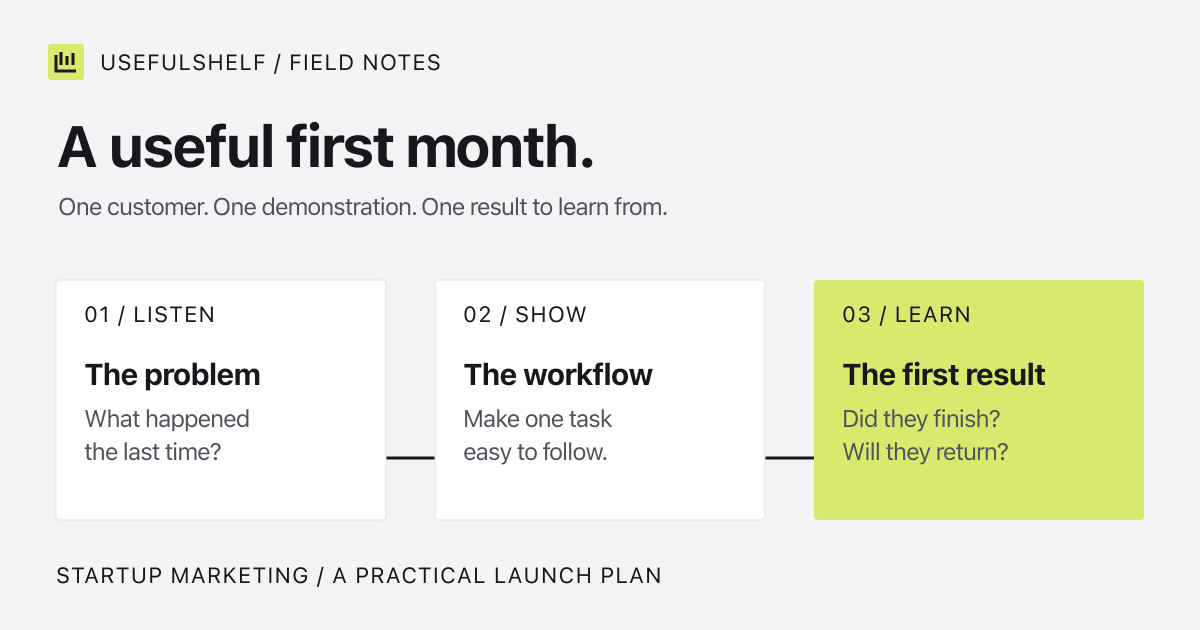
Start here · Startup marketing
Startup Marketing: A SaaS Launch Plan & Free Tools
A first-month plan for a small SaaS team: choose one audience, make a useful demo, launch in the right place, and measure what happens next.
More to explore
Free SEO tools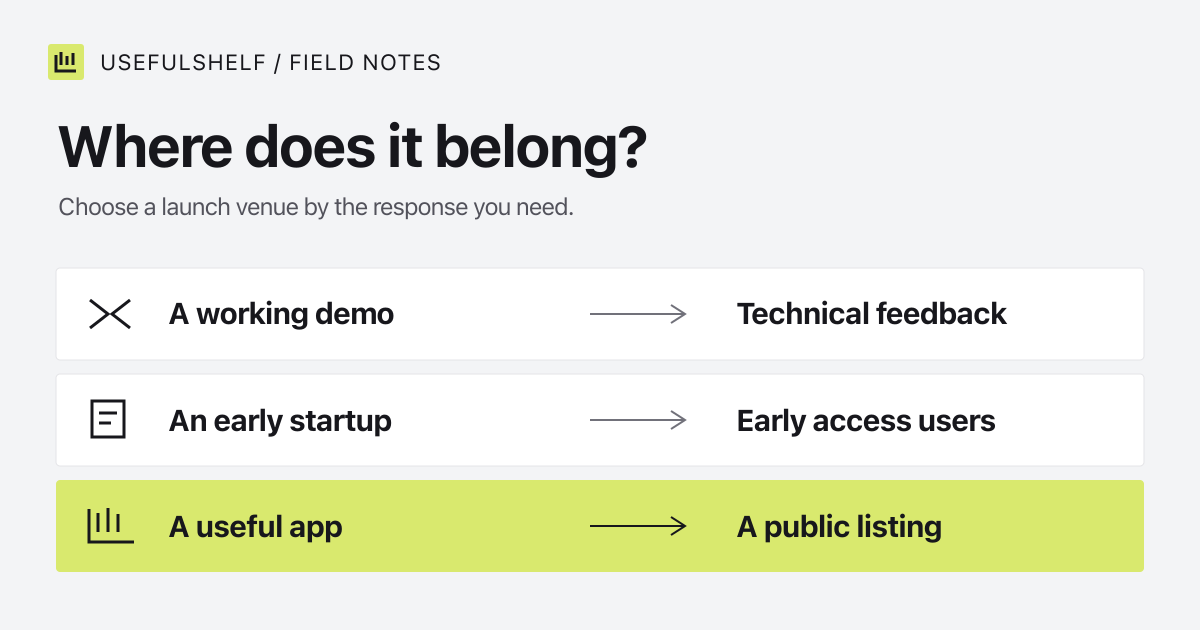
Product launches
Product Hunt Alternatives: Where Should You Launch?
Show HN, BetaList, and UsefulShelf serve different jobs. Compare audience, readiness, and submission rules before spending a week on launch prep.
Idea validation
How to Find Micro SaaS Ideas People Might Pay For
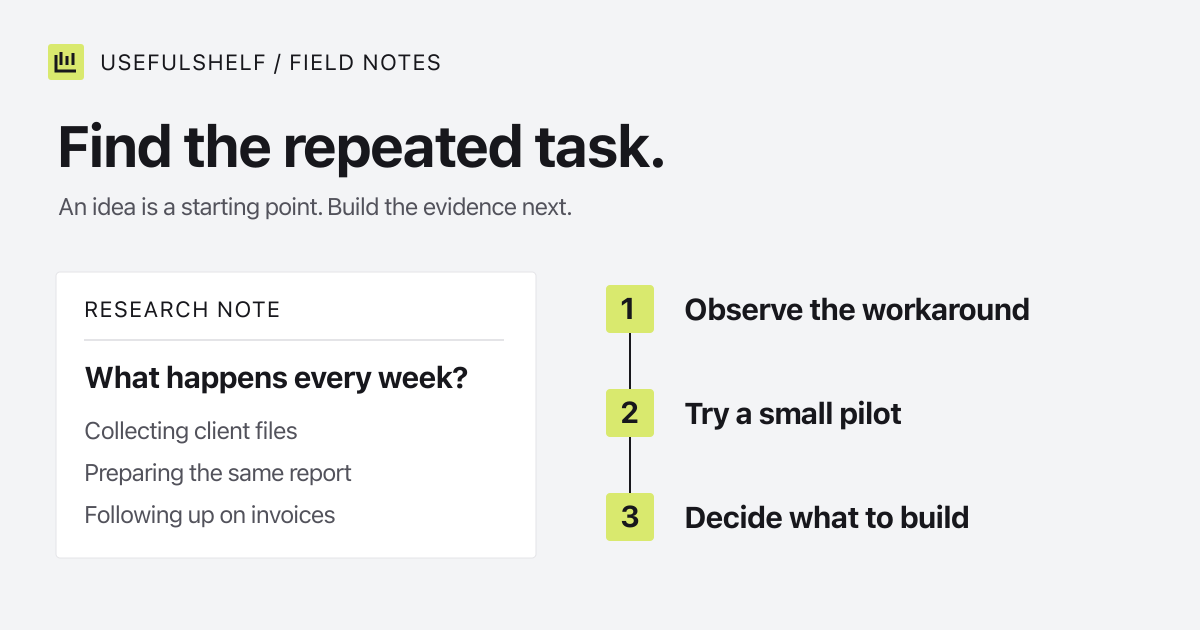
Three specific problems to investigate, the questions to ask, and a small test for each. A research method, not a list of supposedly profitable ideas.
From the shelf
Better Shot: Make a Clearer Product Demo on Your Mac
Plan, record, and edit a short walkthrough with this free screen recorder. Includes a demo script and the sharing tradeoff to understand first.

From the shelf
Screenshot Studio: Turn a Product Screen Into a Launch Image
A practical brief for a readable launch graphic: crop around the result, add one annotation, choose a frame, and check the final export.
Technical SEO
Meta Tags for SEO: Which Ones Matter and How to Write Them
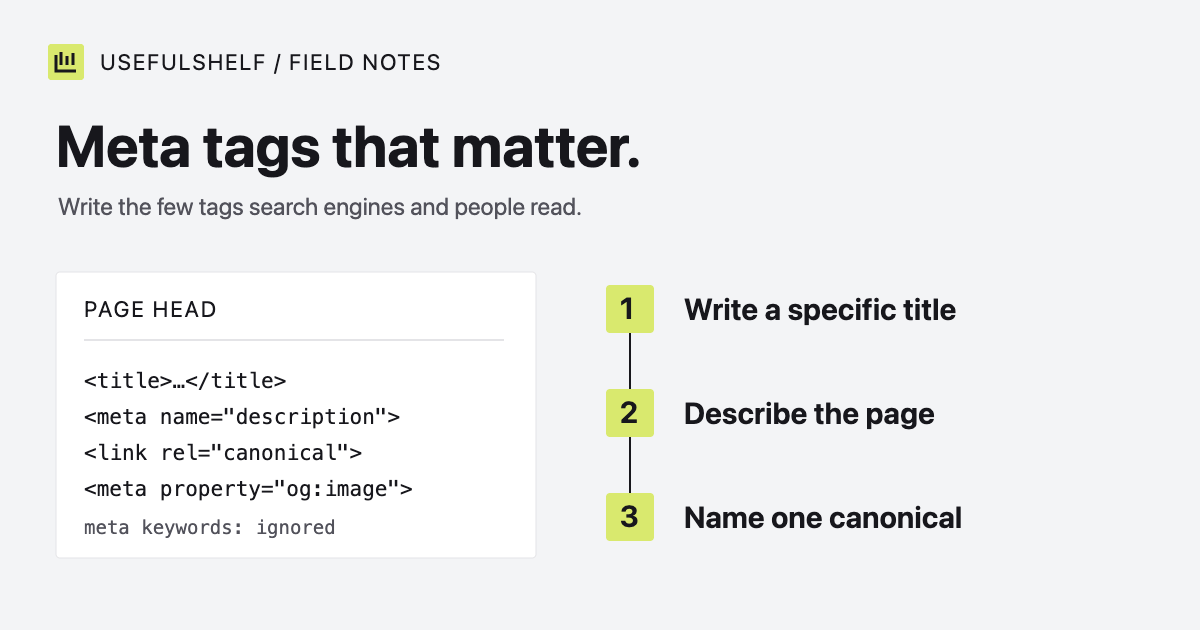
The meta tags Google actually uses, the ones it ignores, and how to write a title, meta description, canonical and Open Graph tags, with examples.
Technical SEO
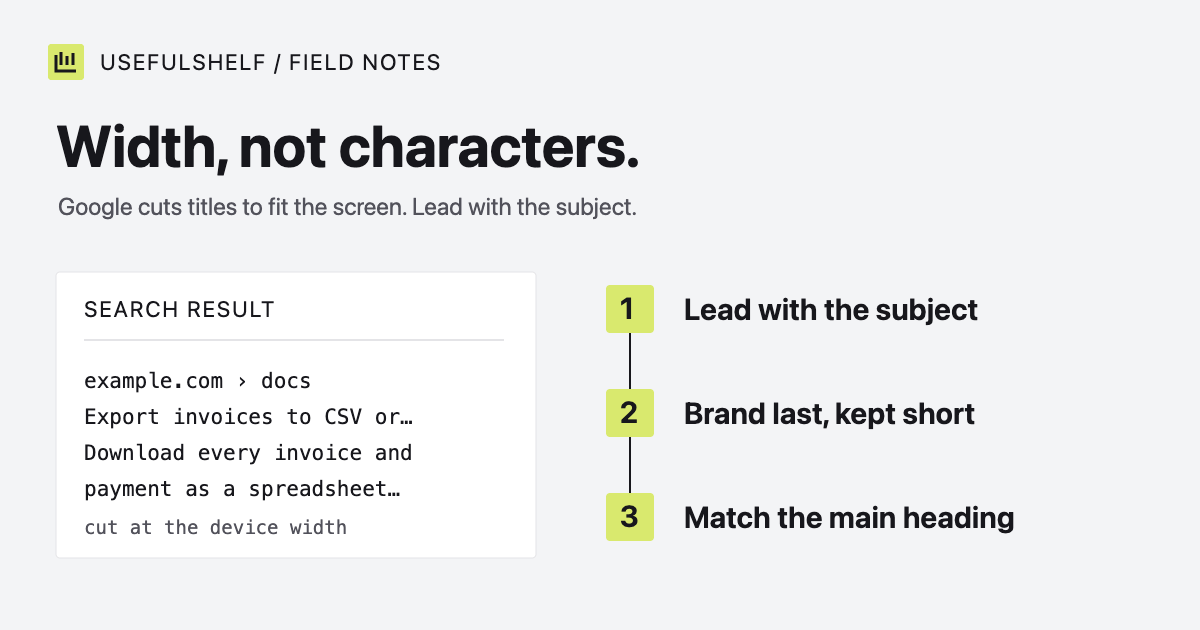
Title Tag and Meta Description Length: What Google Shows
Google sets no character limit for titles or meta descriptions. Learn how truncation works, why titles get rewritten, and how to lead with what matters.
Technical SEO
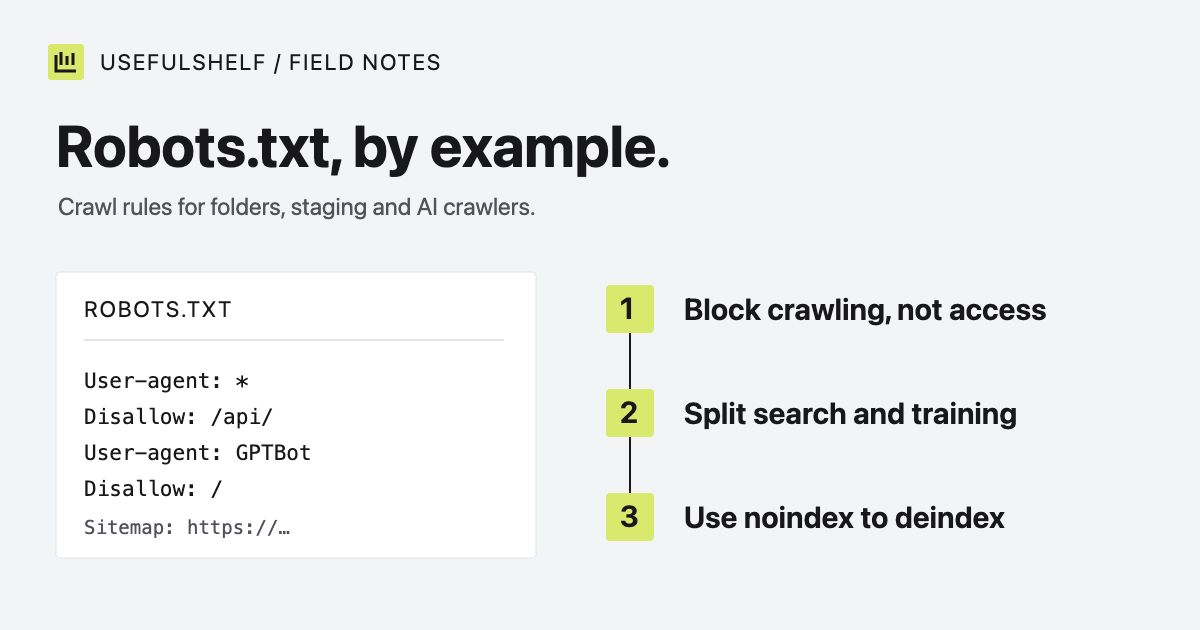
Robots.txt Examples: Disallow All, AI Crawlers and Noindex
Copy-ready robots.txt examples: allow all, block a folder, disallow all, wildcards, and AI search vs training crawlers. Plus when to use noindex instead.
Technical SEO
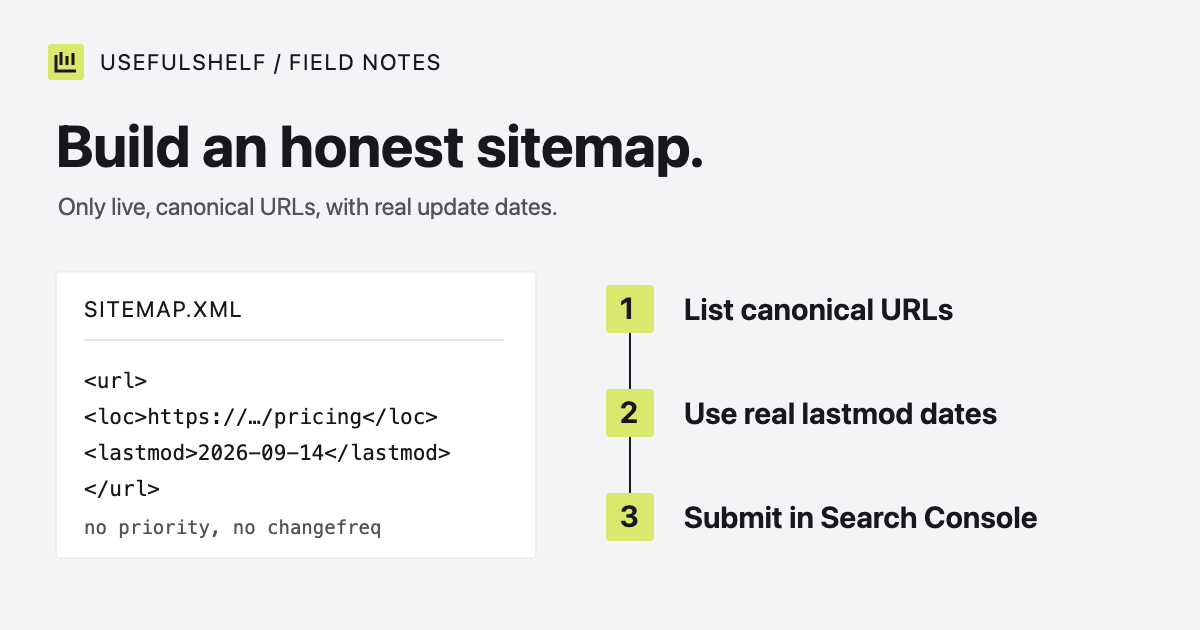
How to Create an XML Sitemap (With Examples)
What an XML sitemap is, a valid example, which URLs to include, how Google uses lastmod, and how to submit your sitemap in Google Search Console.
Technical SEO
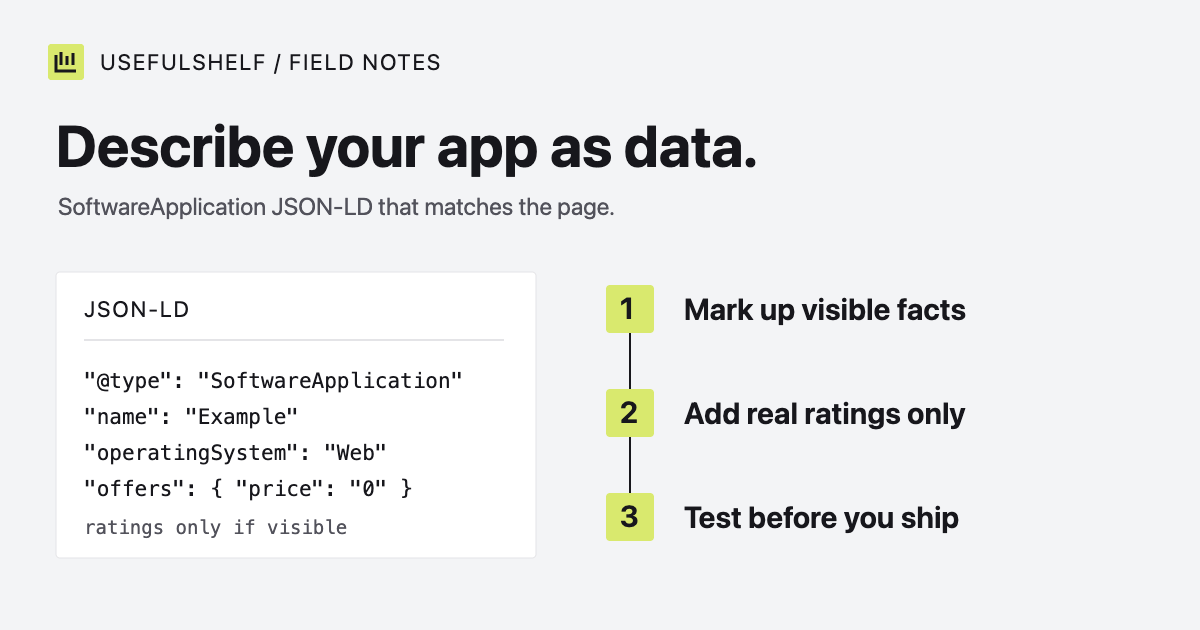
SoftwareApplication Schema: JSON-LD Example for Apps
Copy a SoftwareApplication JSON-LD example, see what Google requires for software app rich results, and learn why fake ratings or prices backfire.
Technical SEO
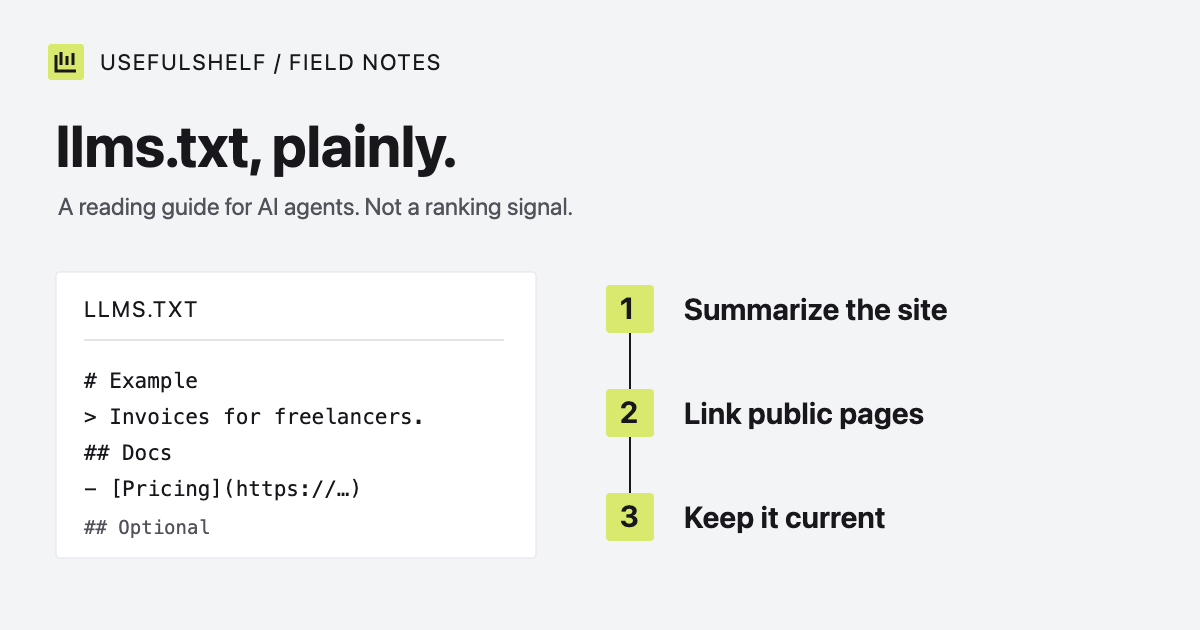
What Is llms.txt? Format, Example and SEO Limits
What llms.txt is, the Markdown format the proposal defines, a working example, and what it cannot do for SEO, crawling or AI training.
Technical SEO
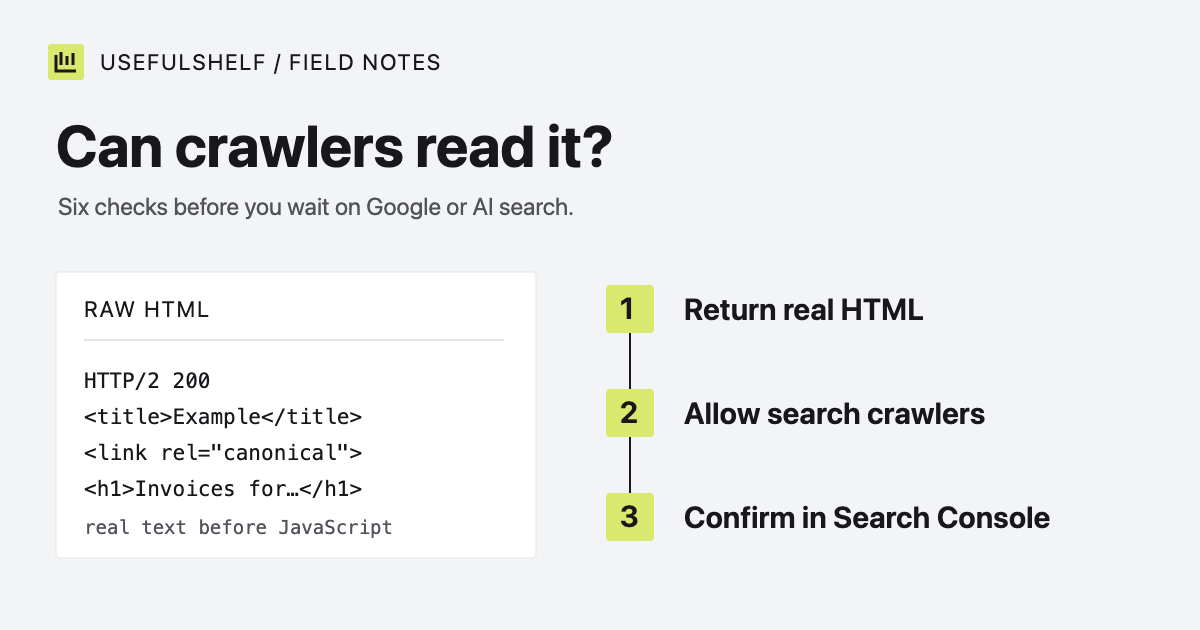
Is My Website Indexable? Checks for Google and AI Search
Check whether Google and AI search crawlers can read and index a page: status, noindex, robots.txt, raw HTML, canonicals and Search Console statuses.
Our product guides explain a particular task, with links to the maker’s documentation and clear notes about limitations. Products built by UsefulShelf’s maker are identified in their articles.